Can a Tyre With a Nail or Screw in It Be Repaired?
When a nail or screw puncture can be safely repaired, when the tyre has to be replaced, and what to do in the meantime.
Posted on
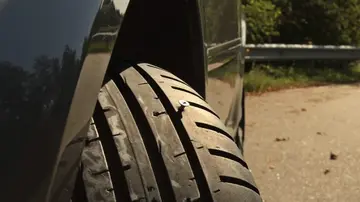
Spotting the head of a nail or screw in your tyre is one of the most common ways drivers find out they have a puncture. Sometimes the tyre is already soft, sometimes it looks perfectly normal and only loses air over a few days. Either way, the first question is usually whether the tyre can be fixed or whether you need a new one.
The good news is that many nail and screw punctures can be repaired properly and safely. Whether yours can depends on where the object went in, how big the hole is, and what has happened to the tyre since.
Short answer: Yes, usually, as long as:
- the nail or screw is in the central three-quarters of the tread, not the shoulder or sidewall;
- the hole is no more than 6 mm across;
- the tyre hasn’t been driven on while flat or badly under-inflated;
- there is no other damage inside the tyre and it has enough tread left.
These limits come from the British Standard for tyre repairs, BS AU 159. If any of them isn’t met, the tyre should be replaced.
Where the Nail or Screw Is Matters Most
Imagine the tread split into four equal strips across its width. The middle two strips, the central three-quarters, are the repairable zone. That part of the tyre is supported by the steel belts underneath and doesn’t flex much, so a properly fitted repair can hold up to normal driving.
The outer strips run into the shoulder, where the tread curves round into the sidewall. The shoulder and sidewall flex every time the wheel turns, and a repair there is likely to work loose or weaken the tyre’s structure. That is why a screw sitting right on the edge of the tread, or anything in the sidewall, means a replacement tyre, even if the hole looks tiny.
The Size of the Hole
For car tyres, BS AU 159 allows repairs to damage up to 6 mm in diameter. Most ordinary nails and wood or roofing screws fall within that. Larger objects such as bolts, thick coach screws or pieces of metal can leave a hole that is too big, and anything that has cut or torn the tread rather than pierced it is unlikely to qualify.
You can’t judge this properly from the outside. A screw can enter at an angle and travel further through the tyre than its head suggests, so the hole is measured once the object has been removed and the tyre taken off the wheel.
Why the Tyre Has to Come Off the Wheel
A repair to the British Standard isn’t just a plug pushed in from the outside. The fitter removes the tyre from the rim so they can inspect the inside. This is the only way to see whether the tyre has been damaged by running low on air. Driving on a deflated tyre crushes the sidewalls between the rim and the road, which can leave rubber dust, creases or a worn band on the inner liner. A tyre damaged like that can’t be repaired, however small the original puncture.
If the inside is sound, the hole is cleaned and prepared, and a combined plug-and-patch repair is fitted from the inside so it both fills the hole and seals the inner liner. The tyre is then refitted, inflated and balanced.
Other Reasons a Tyre May Not Be Repairable
- Existing repairs nearby: the standard limits how many repairs a tyre can have and how close together they can be, so a second or third puncture near an old one may rule out another repair.
- Worn tread: if the tyre is at or close to the 1.6 mm legal minimum, repairing it makes little sense. See our guide to the UK tread depth law.
- Age and condition: cracking, bulges or other signs of ageing mean the tyre should be replaced rather than repaired.
- Run-flat tyres: many manufacturers advise against repairing them or only allow it under strict conditions. We cover this in can run-flat tyres be repaired?
For a fuller checklist, read how to check if my tyre is repairable.
Should You Pull the Nail Out?
No. While the nail or screw is still in the tyre it often acts as a partial seal, which is why many punctures leak slowly rather than all at once. Pulling it out can turn a slow leak into a flat tyre within minutes. Leave it where it is and let a fitter remove it when they are ready to inspect and repair the tyre.
Can You Drive With a Nail in Your Tyre?
If the tyre is holding its pressure, you can usually drive a short distance carefully to somewhere safe or to get it looked at. It isn’t something to leave for weeks. The object can work its way further in, the hole can grow, and if the tyre starts losing air you risk damaging it beyond repair or having it deflate at speed.
Check the pressure and top it up to the figure in your handbook or on the sticker in the door frame if it has dropped. Our guide on how to put air in tyres explains how. If it keeps going down, you probably have a slow puncture, and the sooner it is dealt with, the more likely it is to be repairable.
If the tyre is already flat, don’t drive on it. That is the quickest way to turn a repairable puncture into a tyre that has to be thrown away. Fit your spare if you have one and can do so safely, or call for help. Our post on what to do if you get a flat tyre walks through the options.
What About Tyre Sealant?
The sealant kits supplied with many new cars can get you moving again after a small tread puncture, but they are a temporary fix. Sealant has to be cleaned out of the tyre before a proper repair, and some fitters won’t repair a tyre once sealant has been used, so check before relying on one. Our article on what tyre sealant is covers the pros and cons.
Is a Repaired Tyre as Safe as a New One?
A repair carried out to BS AU 159 is designed to restore the tyre for normal road use, and a properly repaired tyre can usually be used for the rest of its life. Some tyre and vehicle manufacturers have their own rules, for example on speed ratings after a repair or on high-performance tyres, so if you drive a performance car it is worth checking your handbook.
Getting It Sorted
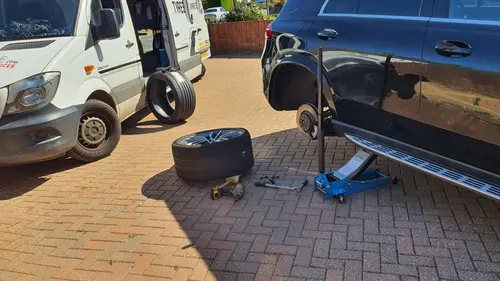
If you’ve found a nail or screw in your tyre, our mobile fitters can come to your home, workplace or the roadside to inspect it and carry out a puncture repair where it is safe to do so. If the tyre can’t be repaired, we can fit a new one on the spot through our mobile tyre fitting service, with free wheel balancing and old tyre disposal. We work 24/7 across England and Wales and aim to reach you within 60 minutes in most cases. Call 07989 606060.