Lost Your Locking Wheel Nut Key? What to Do
Where the key is usually hiding, how to order a replacement using its code, and how locking nuts can be removed without damaging your wheels.
Posted on
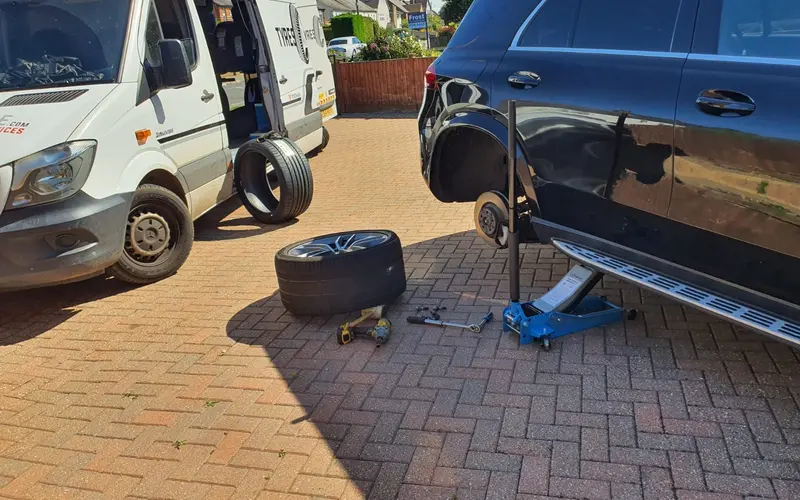
Most drivers only think about the locking wheel nut key when they need it: at the roadside with a flat, or when a fitter arrives to change a tyre. If it is not where you expected, a simple job suddenly gets complicated.
The key is a small adaptor that fits the patterned head of one locking nut on each wheel. Without it, those nuts cannot be undone with a normal socket. The good news is that a lost key is a common problem with well-established fixes.
Short answer: Work through these steps in order:
- search the car properly: glovebox, boot floor, spare wheel well, door pockets and under the seats;
- look for the key code, usually on a card or sticker in the handbook pack, and order a replacement key;
- if that fails, ask a main dealer for your make, who may be able to identify the pattern;
- if you need the wheel off now, have a tyre fitter remove the locking nuts with proper removal tools.
Avoid hammering sockets or using drills on the nuts yourself, as this can damage the wheel and the stud.
Where Is My Locking Wheel Nut Key?
Before assuming it is lost, check every place it tends to end up. The key is often stored in a small pouch or plastic box and gets moved around with other bits and pieces.
- the glovebox, including any compartment underneath or behind the manual;
- in or around the spare wheel well, the jack and the tool kit under the boot floor;
- side pockets and storage trays in the boot, often behind a removable panel;
- the centre console, door pockets and under the front seats;
- at home, if you have had wheels or tyres changed recently, in case it came back in a pocket.
If your car has been to a garage for tyres, brakes or suspension work since you last saw the key, call them. Keys are sometimes left in a tool tray or in the car in a different place from where they started.
How to Find Your Locking Wheel Nut Key Code
Most locking wheel nut sets come with a reference code that identifies the exact pattern of the key. With that code, you can usually order a replacement. Places to look include:
- a card, leaflet or sticker in the wallet with the owner’s handbook and service book;
- the box or case the key was originally kept in;
- paperwork from the dealer or previous owner if the nuts were fitted after the car was built;
- sometimes on the key itself, stamped or printed on the side.
Once you have the code, contact the maker of the locking nuts or a main dealer for your car. Some lock makers let you order a replacement key direct by quoting the code, and may limit how many replacement keys can be supplied. Expect it to take some days to arrive, so this route only helps if the car is not stuck with a flat.
What If You Don’t Have the Code?
Without the code, it is harder but not always impossible to get a matching key. A main dealer for your make may be able to help, particularly if the locking nuts were fitted at the factory. Some lock makers will try to identify the pattern from a clear photograph of the nut head or from a rubbing, though this does not always work because the differences between patterns can be very small.
Have your vehicle registration and proof that you own the car ready, as dealers and manufacturers are understandably careful about supplying keys that could be used to steal wheels.
Can a Tyre Fitter Remove Locking Wheel Nuts Without the Key?
Yes, in most cases. Tyre fitters and garages use specialist removal tools designed to grip the outside of the locking nut so it can be undone. How easy it is depends on the type of lock. Basic locking nuts usually come off fairly quickly, while high-security designs with free-spinning collars take longer and need more specialised kit.
Once removed, the locking nuts are normally damaged and cannot be reused. You can then fit standard wheel nuts or bolts of the correct type for your car, or buy a new locking set with its own key and code.
If you need a tyre fitted and know the key is missing, say so when you book. It lets the fitter come prepared and allow extra time. Our page on how same-day mobile tyre fitting works explains what else helps a job go smoothly.
Why You Shouldn’t Try to Force Them Off Yourself
There is plenty of advice online about hammering an old socket over the nut, using stud extractors, or drilling and chiselling. These methods can work, but they carry real risks:
- a slipping socket or chisel can gouge alloy wheels, and the damage may be expensive or impossible to repair properly;
- heavy hammering can damage the wheel stud, hub or bearing;
- a half-destroyed nut is often harder for a professional to remove afterwards;
- on high-security locks, these methods frequently fail altogether.
If you are at the roadside with a flat, do not attempt this. Get somewhere safe and call for help. Our guide on what to do if you get a flat tyre covers the safe options, and if you are on a motorway, read flat tyre on the motorway: what to do. Never try to change a wheel on a motorway hard shoulder.
How to Avoid Losing the Key Again
- Keep it in one fixed place, ideally with the jack or spare wheel kit, and put it back there every time.
- Photograph the key code card and save it on your phone or email it to yourself.
- When you collect the car after tyre or brake work, check the key has been returned before you drive away.
- When buying a used car, ask for the key and code before you hand over the money, and check the key fits.
Need a Tyre Changed Without the Key?
If you have a flat or a damaged tyre and the locking wheel nut key is nowhere to be found, call 07989 606060 any time, day or night, and mention the missing key. You can also send your postcode and tyre size on WhatsApp. Our fitters cover England and Wales 24/7 for mobile tyre fitting and puncture repair, and we aim to reach you within 60 minutes in most cases, depending on location and traffic.