Tyres and the MOT: What Fails and How to Avoid It
What the MOT tester checks on your tyres, the faults that lead to a fail, and a simple check you can do before the test.
Posted on
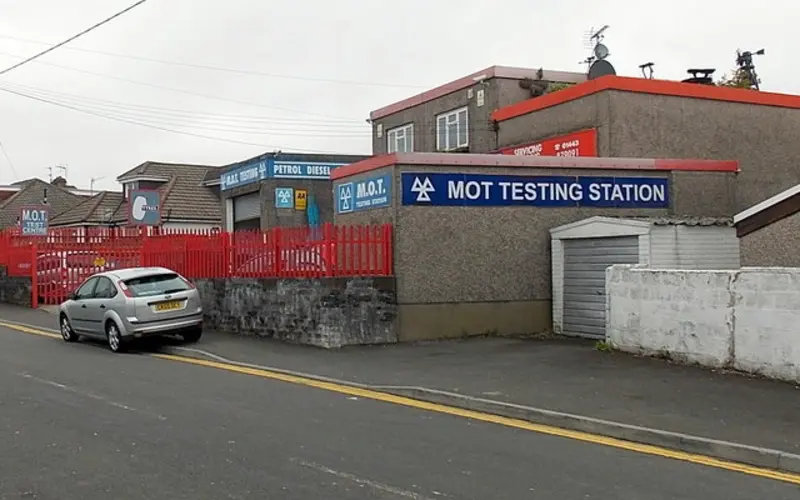
Tyres are one of the most common reasons for a car to fail its MOT, and also one of the easiest to prevent. Most tyre faults are visible if you know what to look for, and a few minutes with a torch and a tread gauge a week or two before the test can save you a retest.
The checks are set out in the DVSA’s MOT inspection manual for cars and passenger vehicles. Here is what they mean in practice.
Short answer: A car is likely to fail its MOT on tyres if:
- any tyre has less than 1.6 mm of tread across the central three-quarters of its width, around its whole circumference;
- a tyre has a serious cut, a bulge or lump, or exposed cords;
- the two tyres on an axle are different sizes or of different construction;
- a tyre’s load capacity is not adequate for the vehicle (a low speed rating may also be flagged);
- on a car first used from 1 January 2012 that has a tyre pressure monitoring system, the warning light shows the system is faulty.
The spare wheel is not part of the test.
Tread Depth: The 1.6 mm Rule
The tester checks that each tyre has at least 1.6 mm of tread in a continuous band across the central three-quarters of the tread width, all the way around the tyre. A tyre can fail even if most of it is fine, for example if one patch has worn down because of a wheel alignment problem, or if a flat spot has formed after heavy braking.
Uneven wear is easy to miss, especially on the inner edge, so check across the full width and turn the steering to full lock to see the front tyres properly. Our guide to the UK tread depth law explains how to measure tread with a gauge, the tread wear indicators or the 20p test.
Cuts, Bulges and Other Damage
Testers look at both sidewalls and the tread for damage that weakens the tyre. The main faults are:
- Cuts: a cut longer than 25 mm or 10% of the tyre’s section width, whichever is greater, that is deep enough to reach the ply or cords.
- Bulges and lumps: a bump or blister on the sidewall usually means the internal structure has been damaged, often by a pothole or a kerb. A tyre in this state can fail without warning and should be replaced straight away, not just before the test.
- Exposed cords: any ply or cord showing through the rubber.
- Fouling: a tyre rubbing against the bodywork, suspension or steering parts.
Even if a tyre passes, cracking in the sidewall or tread grooves is a sign that it is ageing and should be watched closely.
Can You Have Different Tyres on the Same Axle?
The two tyres on an axle must be the same size and the same type of construction. Mixing radial and cross-ply tyres on one axle, or fitting two different sizes on the same axle, is a reason for failure. This can catch out drivers who have had a single tyre replaced in a hurry with whatever size was to hand.
Different brands or tread patterns on one axle are not in themselves an MOT fail, but they are best avoided. Our guide on whether to replace tyres in pairs explains why.
Wrong Load Index or Speed Rating
Every tyre has a load index and a speed rating on the sidewall, after the size. The tester checks that the tyres are suitable for the vehicle. A load capacity that is clearly too low can fail the test, and a speed rating below the car’s specification can be flagged by the tester and may affect your insurance. This is most likely after tyres have been replaced with cheaper ones that don’t match the car’s specification, or on vans and heavy cars that need reinforced tyres.
You can find the correct figures in your handbook or on the tyre placard, usually in the door frame or fuel filler flap.
Will a Tyre Pressure Warning Light Fail the MOT?
For passenger cars with up to eight passenger seats first used on or after 1 January 2012, the tester checks the tyre pressure monitoring system (TPMS) warning light, if the car has one. If the light shows that the system itself is faulty or not working, it is a major defect and the car will fail.
The rule is about faults in the system, not low pressures. If the light is on simply because a tyre is under-inflated, that alone shouldn’t be treated as a system fault, but you should still inflate the tyres to the correct pressure before the test, and find out why one was low. A faulty sensor, often caused by a flat sensor battery or damage when a tyre was changed, needs replacing and the system relearning. Our guide to the tyre pressure warning light explains the difference.
Is the Spare Wheel Checked in the MOT?
No. The tester only inspects the tyres fitted to the road wheels at the time of the test. If they notice a problem with the spare, they may mention it, but it won’t affect the result.
That doesn’t mean the spare can be ignored. If you ever need to drive on it, it has to meet the same legal standards as any other tyre. Check its pressure and condition now and then, and see our guide to the space-saver spare vs tyre repair kit for how to use what is in your boot.
A Quick Tyre Check Before Your MOT
- Measure the tread at several points across and around each tyre.
- Look for cuts, bulges, cracks and anything embedded in the tread, including the inner sidewalls.
- Check that both tyres on each axle are the same size and type.
- Compare the load index and speed rating with your handbook.
- Set the pressures to the recommended figures and make sure the TPMS light goes out.
Remember that tyres have to be legal every day, not just on MOT day. Driving on a defective tyre can lead to a fine and penalty points for each tyre.
Sorting Tyres Before the Test
If your check turns up a problem, our fitters can come to your home or workplace before your MOT and fit new tyres through our mobile tyre fitting service, with free wheel balancing and old tyre disposal included. A puncture can often be dealt with by mobile tyre repair if it is in the repairable area of the tread. We work 24/7 across England and Wales. Call 07989 606060, or send your postcode and tyre size on WhatsApp.