Space-Saver Spare vs Tyre Repair Kit: What’s in Your Boot and How to Use It
How to tell what your car carries for a puncture, the limits of each option, and when it is better to call for help.
Posted on
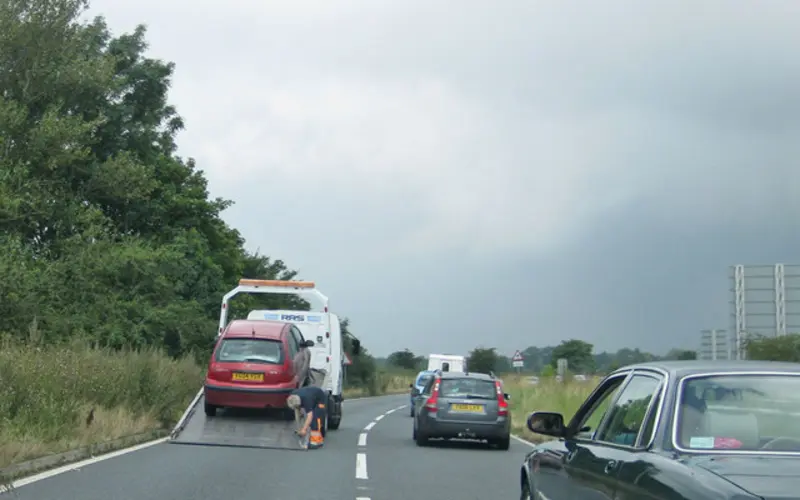
Many drivers only find out what their car carries for a puncture on the day they need it. Fewer new cars come with a full-size spare wheel than in the past, and in its place you may find a narrow space-saver, a tyre repair kit, or nothing at all because the car is on run-flat tyres.
Each works differently and has its own limits. Knowing which you have, and checking it before a long trip, can save a lot of stress at the side of the road.
Short answer:
- Space-saver spare: a thin temporary wheel, usually limited to 50 mph, meant to get you to a tyre fitter, not for everyday driving;
- Tyre repair kit: a bottle of sealant and a small compressor that can seal a small hole in the tread, but not sidewall damage or a large cut, and it also has speed and distance limits;
- Run-flat tyres: let you keep driving for a limited distance at reduced speed after a puncture, with no wheel change.
All three are temporary. The punctured tyre still needs repairing or replacing as soon as possible.
How Do You Know What Your Car Has?
Lift the boot floor. A spare wheel, full-size or space-saver, usually sits in a well under the floor along with the jack and wheel brace. A repair kit is a small case or a compressor with a bottle of sealant, often in a side compartment or a tray under the floor. If you find neither, check the tyre sidewalls for run-flat markings, such as RSC, ROF, SSR or ZP, depending on the brand, and look in your handbook.
While you are there, look for the locking wheel nut key if your car has locking nuts. Without it, a spare is no use, and a fitter will also need it to remove the wheel.
What Is a Space-Saver Spare and How Fast Can You Drive on It?
A space-saver is a lightweight wheel with a narrow tyre, designed to take up less room and weight than a full-size spare. It is for getting you somewhere safe to have the proper tyre sorted, not for carrying on with your journey as normal.
- Speed: most are limited to 50 mph. The limit is printed on the wheel or on a warning label, and your handbook confirms it for your car. Treat it as a maximum and drive more slowly in the wet.
- Distance: there is no legal limit, but manufacturers generally intend them for short distances only. Get the main tyre repaired or replaced as soon as you can.
- Handling: the narrow tyre has less grip, so braking and cornering will feel different. Avoid motorways where you can.
- Pressure: space-savers usually run at a much higher pressure than normal tyres. Check it every few months, because a flat spare is a common discovery on the day it is needed.
- The law still applies: a space-saver on the road must have legal tread and be free of damage, like any other tyre.
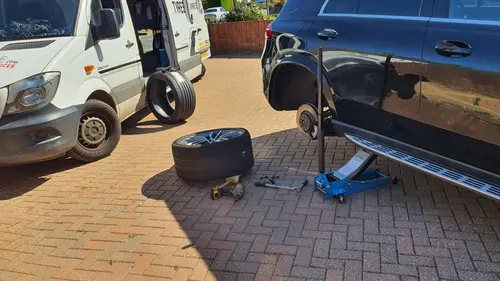
Only change a wheel yourself if you are well away from traffic on firm, level ground. Never do it on a motorway hard shoulder or the verge of a busy road. Our guide to a flat tyre on the motorway explains why, and what to do instead.
How Does a Tyre Repair Kit Work?
Repair kits combine a sealant with a 12-volt compressor that plugs into the car’s power socket. The details vary by manufacturer, so follow the instructions in your kit and handbook, but the usual steps are:
- Park safely away from traffic, turn on your hazard lights and apply the handbrake.
- Leave any nail or screw in the tyre.
- Connect the sealant and compressor to the tyre valve as shown in the instructions, and run the compressor to inject the sealant and inflate the tyre to the pressure stated.
- Drive a short distance straight away so the sealant spreads around the inside of the tyre and fills the hole.
- Stop and check the pressure again with the compressor. If it has dropped significantly, or won’t hold, the kit has not worked and the car shouldn’t be driven further.
- Stick the speed-limit label from the kit where you can see it, and get the tyre looked at as soon as you can.
Many kits limit you to 50 mph after use, and some manufacturers also set a maximum distance before the tyre must be professionally inspected. Check the label on your kit, because the figures differ between makes.
What Can’t a Repair Kit Fix?
Sealant is designed for small punctures in the tread, the kind of hole a nail or screw leaves. It won’t reliably seal:
- damage to the sidewall or shoulder;
- cuts, tears or holes larger than the kit is designed for (often around 6 mm);
- a tyre that has come off the rim, or a damaged wheel;
- a tyre that has been driven on while flat and is already damaged inside.
Sealant also has a shelf life. The bottle is usually dated, and an out-of-date one may not work, so check yours and replace it if needed. Once used, the bottle has to be replaced too.
Can a Tyre Be Repaired After Using Sealant?
Sometimes. A proper repair means taking the tyre off the wheel, cleaning the sealant out and inspecting the inside. Some fitters won’t repair a tyre that has had sealant in it, and some sealants can affect tyre pressure sensors, which may then need cleaning or replacing. If you use a kit, tell the fitter, so they know what to expect. Our guide to tyre sealant covers the pros and cons in more detail.
What About Run-Flat Tyres?
Run-flats have stiffened sidewalls that can support the car for a while with little or no air, so you don’t need to stop on a dangerous stretch of road to change a wheel. They also have limits on speed and distance, set by the vehicle and tyre manufacturer, and many can’t be repaired after running flat. Our post on whether run-flats can be repaired goes into more detail.
When to Call for Help Instead
If the tyre is badly damaged, the sealant hasn’t held, you can’t find the locking nut key, or you are anywhere near fast-moving traffic, don’t try to fix it yourself. Get to a safe place and call for help. Our fitters can come to you with a puncture repair where it is safe to do so, or a new tyre through mobile tyre fitting if it isn’t. We work 24/7 across England and Wales and aim to reach you within 60 minutes in most cases. Call 07989 606060, or send your postcode and tyre size on WhatsApp.