Electric Car Tyres Explained: Do EVs Need Special Tyres?
How weight, torque and quiet cabins change what an electric car asks of its tyres, and what to check when you replace them.
Posted on
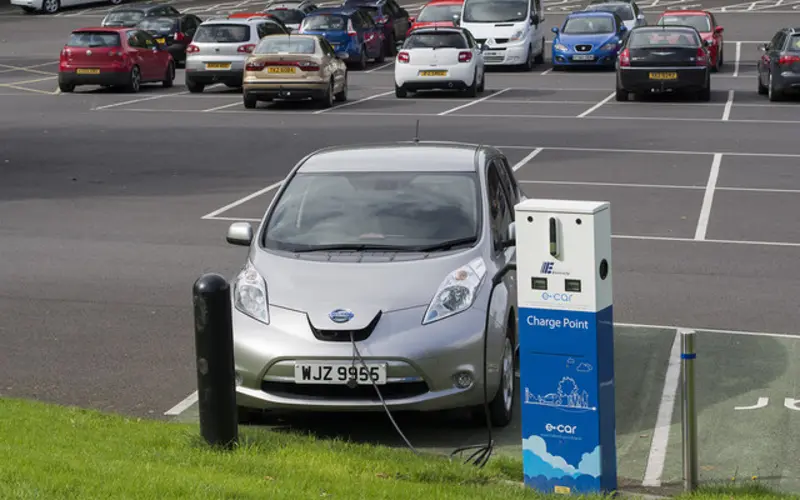
Tyres are one of the few parts of an electric car that work in much the same way as on a petrol or diesel car. They are still round, black and made of rubber, and they still need the right pressure and enough tread.
But an EV puts different demands on them. It is usually heavier, delivers its power instantly and is quiet enough that you hear the tyres more. That is why tyre makers now sell ranges aimed at electric cars, and why it pays to check the details before you replace them.
Short answer: Not legally, but the details matter.
- You can fit any road-legal tyre to an electric car as long as it matches the size, load index and speed rating your car requires;
- the load index is the one to watch: many EVs need XL or the newer HL (High Load) tyres to carry their weight;
- tyres designed for EVs usually aim for lower rolling resistance (better range), less noise and better wear under high torque;
- fitting an ordinary tyre that meets the specification is legal, but you may notice more road noise or slightly less range.
Why Are Electric Cars Harder on Tyres?
Two things set EVs apart. The first is weight. A battery pack adds a lot of mass, so an electric car is often considerably heavier than a petrol or diesel model of a similar size. Every tyre has to carry more load, which works the rubber harder in corners, under braking and over potholes.
The second is torque. An electric motor delivers its full pulling power almost instantly, from a standstill. Pull away briskly and the tyres have to cope with that force straight away, which can scrub the tread, especially on the driven wheels.
Do EV Tyres Wear Out Faster?
Many drivers find that they do, though how much depends on the car, the tyre and how it is driven. Weight and torque are the main reasons. You can do a lot to slow the wear:
- accelerate smoothly rather than using the full instant torque every time you pull away;
- keep the pressures at the figure on the door-frame sticker or in the handbook, and check them at least monthly;
- have the alignment checked if you notice uneven wear or the car pulling to one side;
- rotate tyres between axles if your car’s manufacturer allows it, as the driven axle often wears faster.
Watch the tread carefully, because an EV can reach the 1.6 mm legal limit sooner than you expect.
What Does HL Mean on a Tyre?
Every tyre has a load index, the number after the size that tells you the maximum weight it can carry at the correct pressure. Standard tyres have one load index for their size, and XL (extra load) tyres are reinforced to carry more. We explain XL in what does XL mean on a tyre?
Some heavy EVs need even more capacity than XL can provide, so the European tyre standards body introduced a new category, HL (High Load). On the sidewall, HL appears in front of the size, for example HL 245/40 R19 101Y. In that example size, Continental quotes a load index of 94 for a standard tyre, 98 for XL and 101 for HL.
If your car came with HL tyres, the replacements must have at least the same load index. Fitting a standard or XL tyre with a lower load index means the tyre could be overloaded, which is unsafe. Check the markings on your current tyres or in your handbook before ordering.
Why Are EV Tyres Quieter?
Without engine noise to mask it, tyre roar is one of the loudest sounds inside an electric car. Many EV tyres have a foam ring bonded to the inside of the tread to absorb the hollow, drumming noise that tyres make on rough surfaces. Different brands use their own names for this, such as Continental ContiSilent or Michelin Acoustic.
The foam doesn’t change the size, load or speed rating, but it does matter if you get a puncture. Repairing a foam-lined tyre usually means removing a section of foam around the hole first, and not every repair setup is ready for that. Let your fitter know if your tyres have foam inside.
Do Tyres Affect an Electric Car’s Range?
Yes. Rolling resistance, the energy needed to keep a tyre turning, has a direct effect on how far you can go on a charge. Tyres designed for EVs usually focus on low rolling resistance, and you can compare this using the fuel efficiency grade (A to E) on the tyre label. Wider wheels and larger wheel sizes can also cost range.
Don’t choose on rolling resistance alone. Check the wet grip grade on the same label as well, because that tells you about braking on wet roads. Our comparison of budget vs premium tyres explains how to weigh up the label grades. Low pressures also add rolling resistance, so keeping tyres correctly inflated is one of the simplest ways to protect your range.
Can You Put Normal Tyres on an Electric Car?
Yes, provided the tyre meets your car’s specification for size, load index and speed rating. There is no legal requirement in the UK to fit a tyre marketed for EVs. Things to keep in mind:
- for some EVs with unusual sizes, the only tyres available are ones designed for them;
- some tyres carry manufacturer approval marks for particular models, and sticking with those keeps the car as it was designed;
- an ordinary tyre may be noisier and give slightly less range than an EV-focused one, and may wear faster on a heavy, powerful car.
Many EVs also have no spare wheel, relying on a tyre repair kit instead. Our guide to the space-saver spare vs tyre repair kit explains how to use one.
Getting EV Tyres Fitted
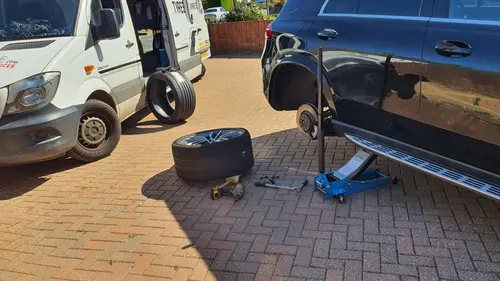
Our fitters can supply and fit tyres for electric cars at your home, workplace or roadside through our mobile tyre fitting service, with free wheel balancing and free disposal of the old tyres. We stock premium, mid-range and budget options. When you get in touch, give us the full size from the sidewall, including the load index and any HL or XL marking, so we bring the right tyre. Call 07989 606060, 24/7, or send your postcode and tyre size on WhatsApp.